
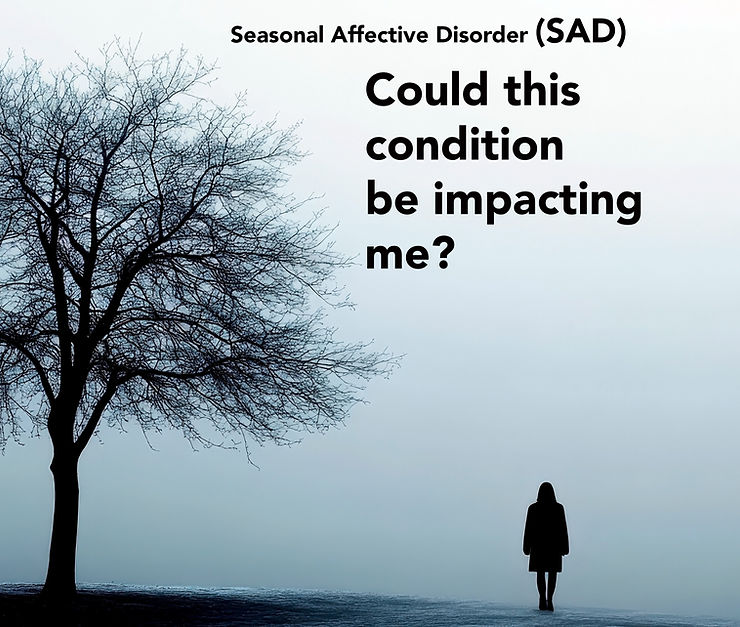
Exploring the Impact of Seasonal Affective Disorder: Could This Be Affecting Your Life?
Seasonal Affective Disorder (SAD) is a type of depression that occurs seasonally, most commonly in fall and winter when there is less sunlight. Here are some common signs and symptoms and some effective strategies to help:
Feeling, hopeless, worthless, little energy and lack of interest in life. Sleeping too much or too little and change in appetite. You’re either eating too much or too little.
Causes & Risk Factors
Reduced sunlight exposure, affecting serotonin and melatonin levels
Disruptions in the body’s internal clock (circadian rhythm)
Higher risk in people with a family history of depression
More common in women
If you or someone you know is experiencing these symptoms, c
onsider speaking with a doctor or mental health professional. Treatments include:
1. Get More Light Exposure
Try to spend at least 30 minutes outside daily, especially in the morning. Natural sunlight helps regulate mood.
If sunlight is limited, consider a light therapy lamp (10,000 lux, 20-30 minutes daily).
2. Keep Moving
Exercise boosts serotonin and endorphins, improving mood. Even a 15-minute walk can help.
Try yoga, stretching, or dancing—anything that gets your body moving.
3. Stick to a Routine
Wake up and go to bed at the same time every day.
Schedule activities you enjoy, even when you don’t feel like it.
4. Eat Mood-Boosting Foods
Increase omega-3s (salmon, flaxseeds, walnuts).
Reduce processed sugars and alcohol, which can worsen mood swings.
Eat foods rich in Vitamin D (eggs, mushrooms, fortified dairy).
5. Stay Social
Isolation makes SAD worse. Plan weekly check-ins with friends or family.
If motivation is low, try virtual chats or a quick text check-in.
6. Try Mindfulness & CBT Techniques
Practice gratitude journaling (write 3 good things daily).
Challenge negative thoughts: If you think, “Winter is always miserable,” reframe it: “I have tough days, but I also find joy in small moments.”
7. Consider Supplements & Therapy
Vitamin D supplements can help if you’re deficient.
If SAD is severe, CBT (Cognitive Behavioral Therapy) has been shown to be very effective.